

Technical downtime is just a glitch in the system. But the second your product stops working, it’s all about communication. If your service goes down and no one explains why, users get restless. They refresh and try again. They start to think it’s their problem. If you give it a few minutes, you’ll have a bunch of annoyed customers in your email inbox.
Some industries feel that pain a lot more than others. For them, a status page isn’t a nice-to-have thing but something that people expect.
Why Poor Communication Makes Downtime Worse In Some Industries
Not every product takes the same hit when it goes down. For anything tied to money, decisions, health, or other critical tasks, silence is risky. People want to know what’s happening right now. Even a short outage can feel like a big deal if you keep them in the dark.
You’ve probably been there. Maybe the problem is minor, but if no one tells you what’s going on, it feels a lot bigger. Suddenly, support is overwhelmed with tickets, forums erupt with complaints, and the whole thing spirals out of control.
That’s exactly when a status page becomes essential.
Why High-Stakes Industries Need A Status Page
A status page does one simple thing: it gives everyone a reliable place to check. Instead of making frantic calls or guessing, users can see what’s going on, where the problem is, and if they need to take any action. That kind of transparency keeps people calm and stops rumours about your product.
If you’ve got a huge user base, having fewer support calls and less churn means your team can focus on actually fixing things, not just fielding the same questions over and over.
10 Industries That Can’t Do Without Status Pages
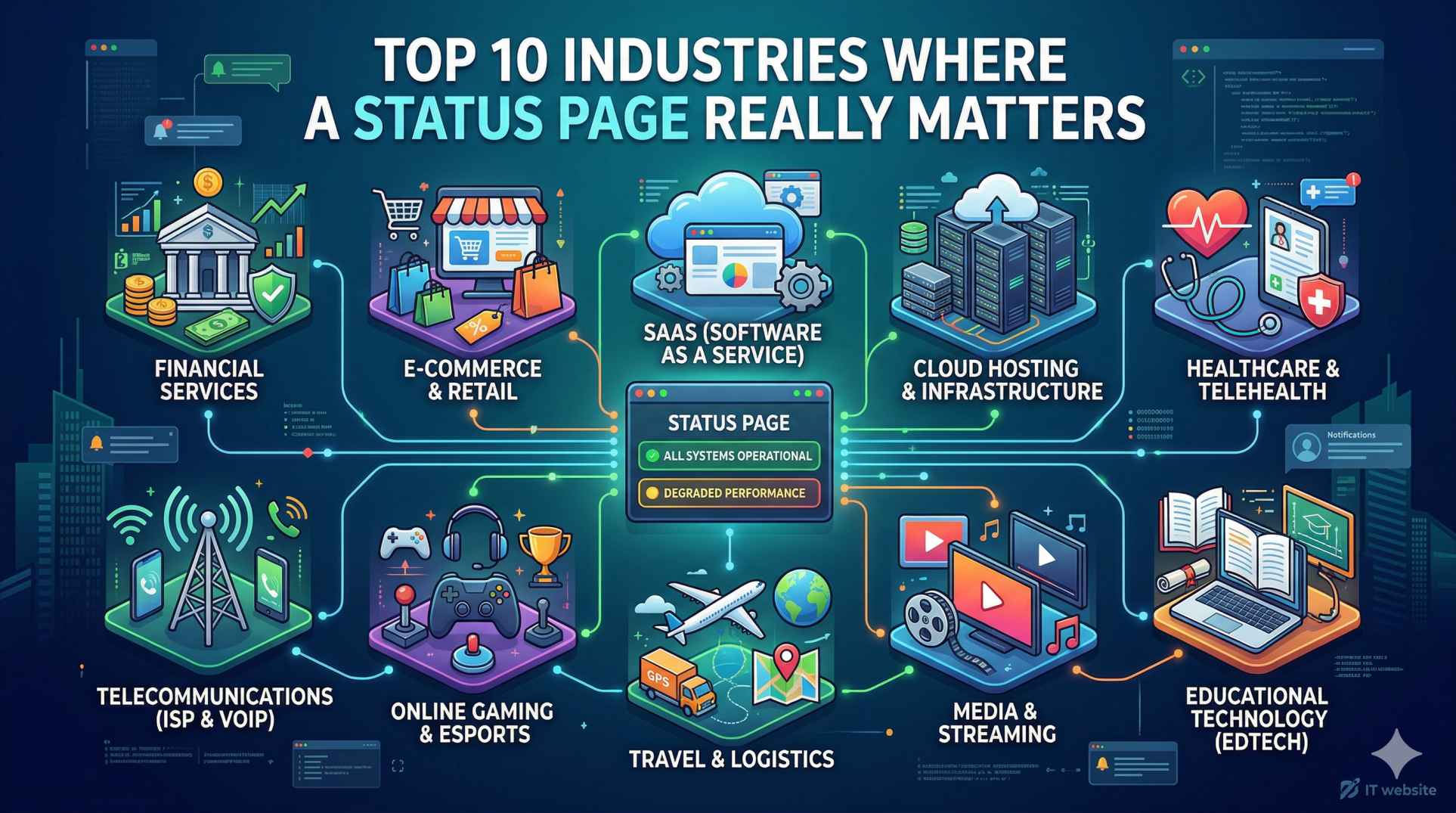
Although status pages are essential for every business, there are a few industries for which not having a status page can be a mistake. Below is a list of 10 such industries.
1. Finance And Fintech
Finance is all about trust. When something breaks, people immediately worry about their money. That means more support calls, more stress, and everyone double-checking their balances and transactions. Even if no one’s actually lost money, the silence makes it worse.
A status page cuts through all that. When users see that stuck transactions or weird balances are just temporary, it’s almost as good as fixing the problem itself.
2. SaaS Software Providers
SaaS tools are a part of people’s daily routines. When they stop working, there’s usually no backup plan. Users start refreshing, logging out, logging back in, and then hitting up support to see if anyone else is having the same issue.
A status page breaks that cycle. It lets customers know what’s happening so they can adjust their day instead of fumbling around in the dark.
3. E-Commerce And Online Marketplaces
Mistakes cost money. If checkout fails or a page doesn’t load, customers bail, and some won’t come back. Support teams see it firsthand: when payments won’t go through, and there’s no clear update, people start thinking the site’s a scam.
Just being open about what’s going on and when it’ll be fixed helps keep trust alive, even during the mid-shopping spree.
4. Healthcare And Health Tech
Healthcare is extra sensitive. If there’s a portal error or a booking issue, anxiety spreads fast. Patients want to know if their appointments are affected. Clinics want to know what’s still working. Silence just makes things worse, especially when real health concerns are at stake.
A health status page lets everyone know what to expect, without drowning the support team in calls.
5. Telecom And Web Hosting Providers
Connectivity problems are obvious. Dropped calls or slow internet? Users don’t need to guess, as they know something’s wrong. The real question is, is it just them or is everyone affected?
If you don’t keep people updated, support lines get swamped with the same question over and over. A status page gives a quick answer, shows progress, and keeps you from repeating yourself all over social media.
6. Cloud Infrastructure And Hosting Companies
Cloud services sit at the centre of a lot of other products. When they go down, the fallout can be huge. Developers and businesses need fast updates to figure out if they should switch systems or sit tight. They need clear info, and they need it now.
A status page gives them that baseline so they can make quick decisions.
7. Gaming And Media Entertainment Sites
Gaming outages are just plain emotional. More than any other industry, players have an almost visceral expectation of being online. When that’s taken from them, they respond accordingly. Without a status page, the frustration spreads to forums and Twitter.
Rumours circulate faster than the truth. Even when there are no services, providing knowledge of what is happening through a status page reduces the volume of vocal feedback.
8. Logistics And Fulfilment Services
When tracking or dispatch systems go down, a team needs to know what’s going on now. Were the new pickups for tomorrow delayed? Is there a missing date? Do we need to fine that customer? A status page supports these operations in the field with needed clarity.
9. Edtech Systems
Online learning tools often find themselves scheduled at the same time every day. Sudden outages in the middle of exams or live classes lead to immediate panicked responses. Without clear communication, no one trusts the system.
A platform status page can keep students, teachers, and administrators informed without adding any extra burden.
10. AI And Data Science Tools
AI products depend highly on API functions. When those go down, the company can’t tell what is wrong fast. Those systems confuse users because their complexity prevents them from explaining the technical failure to anyone without an advanced degree.
A status page can clarify system health and end-user progress without alienating audiences from technical details.
Why Industries Rely On Status Pages
Across all of these industries, the same element shines through. When systems become unstable, what users need is not a technical explanation; it is a confirmation and a path forward.
A status page gives them that without any extra contact or delay. This is also one of the points where platforms like Incipulse can help teams communicate throughout outages, incidents and maintenance.
Conclusion
Other sectors worry about the damage caused by outages. Certain high-trust industries worry about the damage caused by bad communication. Having a place to troubleshoot that is trusted and reliable reduces confusion in high-stakes products.
FAQs
Do smaller teams require a status page?
Yes. Companies of any scale will benefit from a distinct page to relieve stress in high-trust segments.
Do infrequent outages make a status page less useful?
If anything, it is worse. In environments where outages are rarer, customers will be confused. A status page quickly guides them back to comfort.
