admin

admin

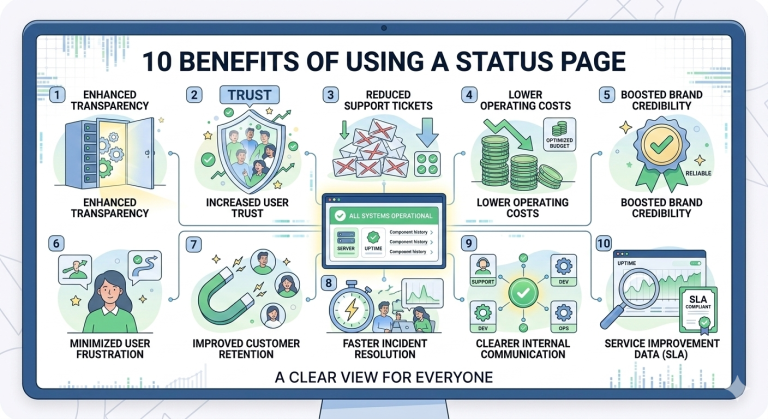
10 Benefits of Using a Status Page

A status page is often introduced during a crisis. In reality, its value extends far beyond outages. For SaaS companies, a status page functions as a communication layer between infrastructure and customers. It clarifies what is happening, reduces confusion, and…

10 Signs Your SaaS Needs a Status Page

Many SaaS companies believe reliability alone is enough to maintain customer trust. In reality, reliability and communication are inseparable. Even a technically short outage can feel long and chaotic when customers do not know what is happening. A status page…

Role-Based Access Control in Incident Management

Incidents test more than infrastructure. They test coordination, accountability, and internal discipline. When multiple teams are working under pressure, unclear permissions can quickly create confusion. Someone may close an incident prematurely. Someone else may escalate severity without authority. Sensitive notes…

Automating Incident Response with Webhooks

Manual incident response breaks down quickly as systems grow. At a small scale, it feels manageable. An alert fires. Someone checks it and posts in Slack. Other person opens a ticket. Someone updates stakeholders. That chain works until coordination overhead…

How Status Pages Reduce Customer Churn

Customers rarely leave the moment an outage happens. What pushes them toward customer churn is usually the experience around the outage, not the technical failure itself. When something breaks, and there is no explanation, users start questioning reliability. They retry…